New Release

ShippingAI Agents

Principles and Architecture for Reliable Agents

Most books about agents end when the demo works. This one starts there: evaluation, safety, cost, and the discipline that makes a system dependable.

20+ Years
Shipping AI systems
After the Demo
Where the book begins
Field Guide
Reliable agents
Shipping AI Agents to Production by Pramod Singh, book cover

Pramod Singh

Production ML Practitioner • Agent Systems

Pramod Singh builds and operates machine-learning and agent systems. His attention stays on the unglamorous work that decides whether those systems survive contact with real users: evaluation, observability, safety, and incident response.

For more than two decades he has shipped analytics and AI in telecom, from large-scale customer-experience platforms to generative AI, retrieval, and multi-agent architectures meant to run under real operational pressure.

He holds a postgraduate qualification in data science and mentors practitioners in generative and agentic AI programs at Johns Hopkins University and The University of Texas at Austin, with Great Learning. This book distills the practices behind taking systems like MedGuard from a convincing demo to something a team can defensibly depend on.

Shipping AI Agents to Production, front and back cover

Shipping AI Agents to Production

Most books about AI agents stop where the hard part begins. They teach you to wire a model to a few tools, watch it complete a task in a demo, and declare victory. This book is about everything that happens after the demo works.

Evaluation, testing, observability, safety, cost control, and operational discipline are what separate a party trick from a system people can depend on. The writing stays with those practices, the ones that still hold when the inputs are unfamiliar and the failures are public.

You have built an agent that works on your laptop. It demos well. Shipping it is a different game: inputs you never imagined, costs that are real, and the occasional failure in front of users. You do not need prior production machine-learning experience. You do need to be comfortable reading code, and to care about building things that hold up under pressure.

If words like agent, tool call, and grounding are not yet second nature, begin with Part I, Foundations. It explains what an agent is, how one actually works, and when you should and should not build one. Readers already fluent in the basics can skim Part I and start in earnest at Part II.
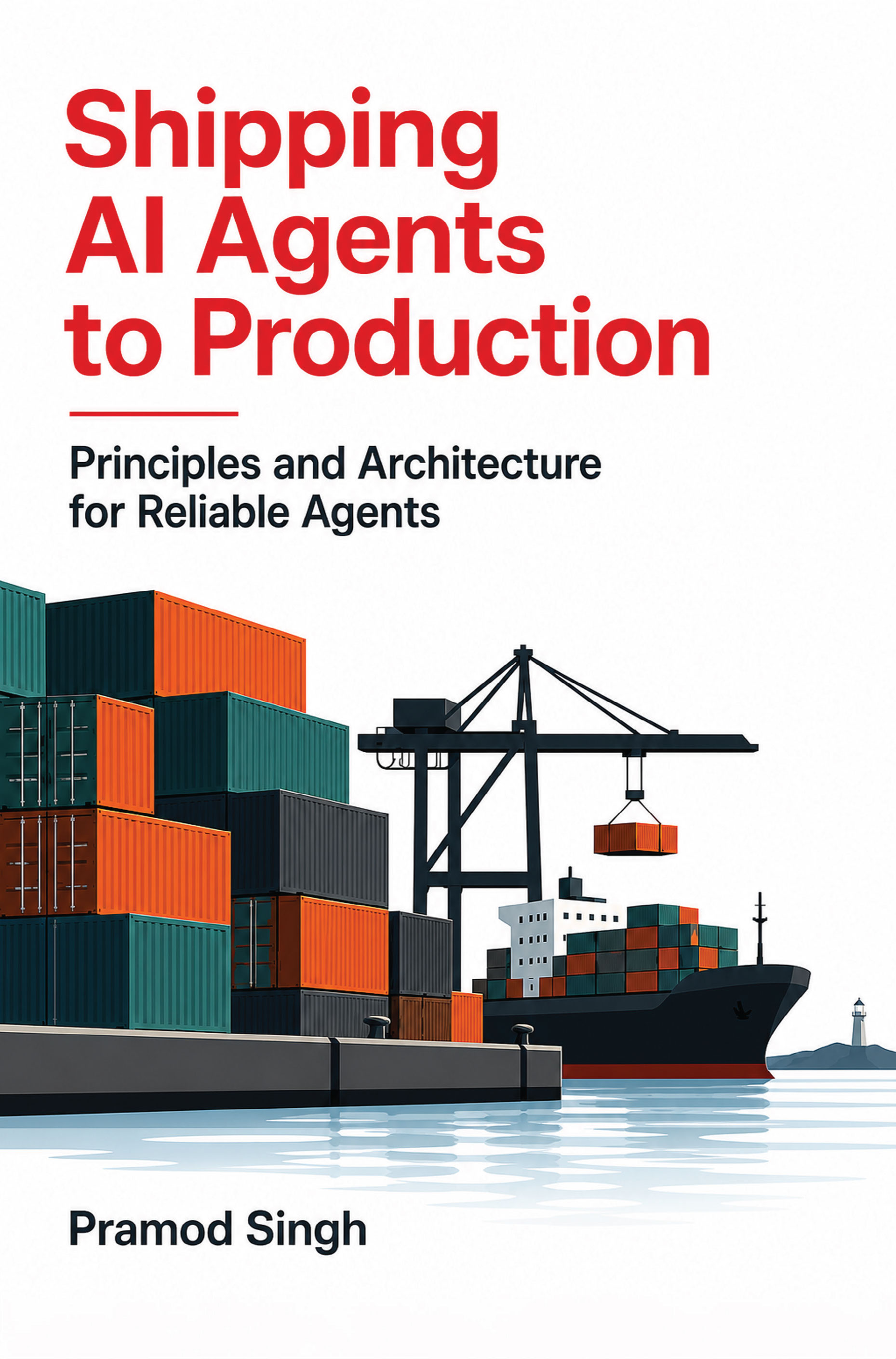
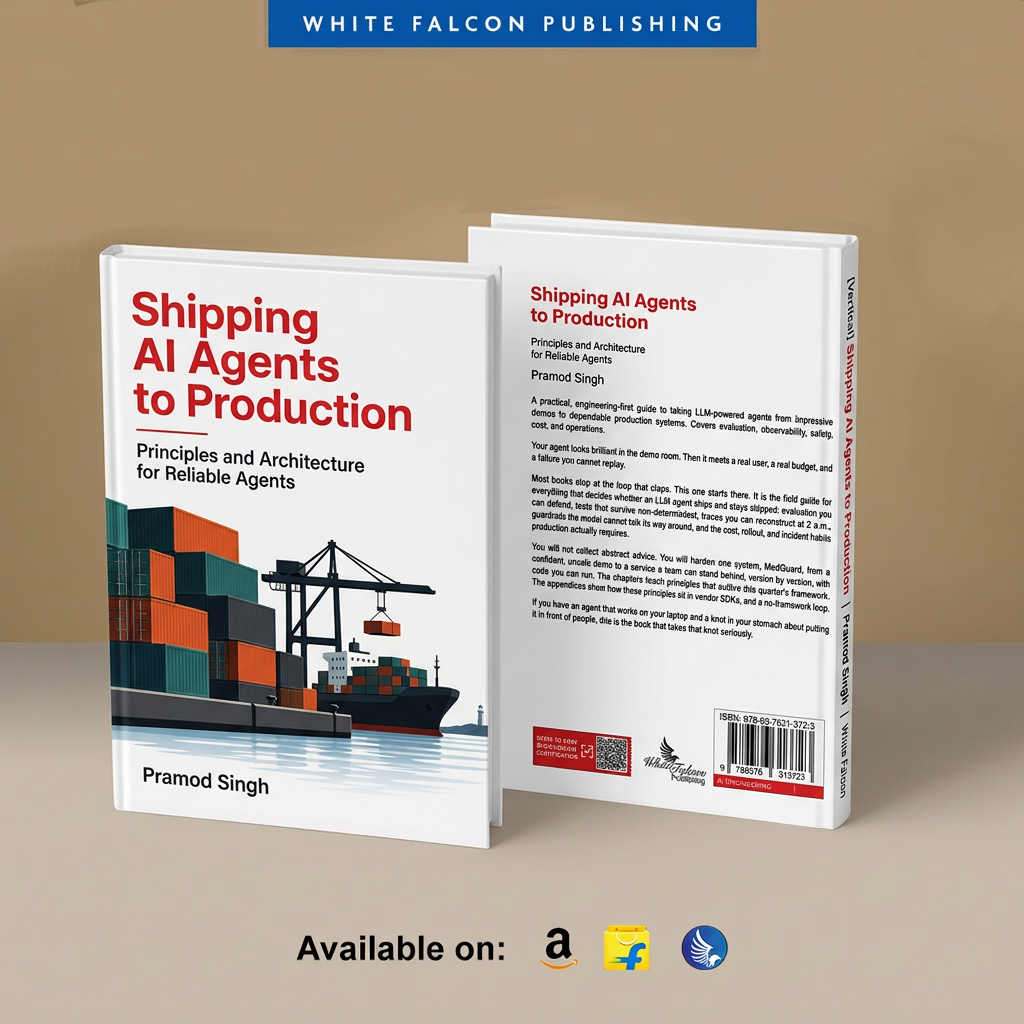
Shipping AI Agents to Production — Out Now

A working demo is only a promise.

Reliability is earned in production.

Ship what a team can defend.

— Pramod Singh

Watch the Trailer

Reach the Author

Write to Pramod about the book, a production system, or the work of taking an agent from a convincing demo to something a team can depend on.